

The Moat
Forget the left & right the real economic fight is between monopoly and the free market

Listen to any investor podcast or LinkedIn analyst, and a word will arrive, a word that sounds innocuous but is responsible for most of the misery on the planet, the word is: the moat. Not a strategy, not a product, not a plan to serve customers better. A moat. Something dug round a castle to keep people out. That, apparently, is the highest ambition of modern capitalism: across countless thousands of pitch decks, commentaries and shareholder meetings, a wink to all that the plan is not to compete, but to build a monopoly so nobody else can.
Nobody says monopoly any more. It sounds ugly, and everybody knows it is supposed to be illegal, or at least frowned upon, so the word has been laundered. Now it’s a moat. Or a platform. Or defensibility. Or, my favourite, a flywheel, as though beating down every competitor were simply the laws of physics at work rather than a business plan. Strip away the language and what’s left is the oldest ambition in commerce: find a chokepoint, own it, and charge whatever you like for as long as you can hold it.
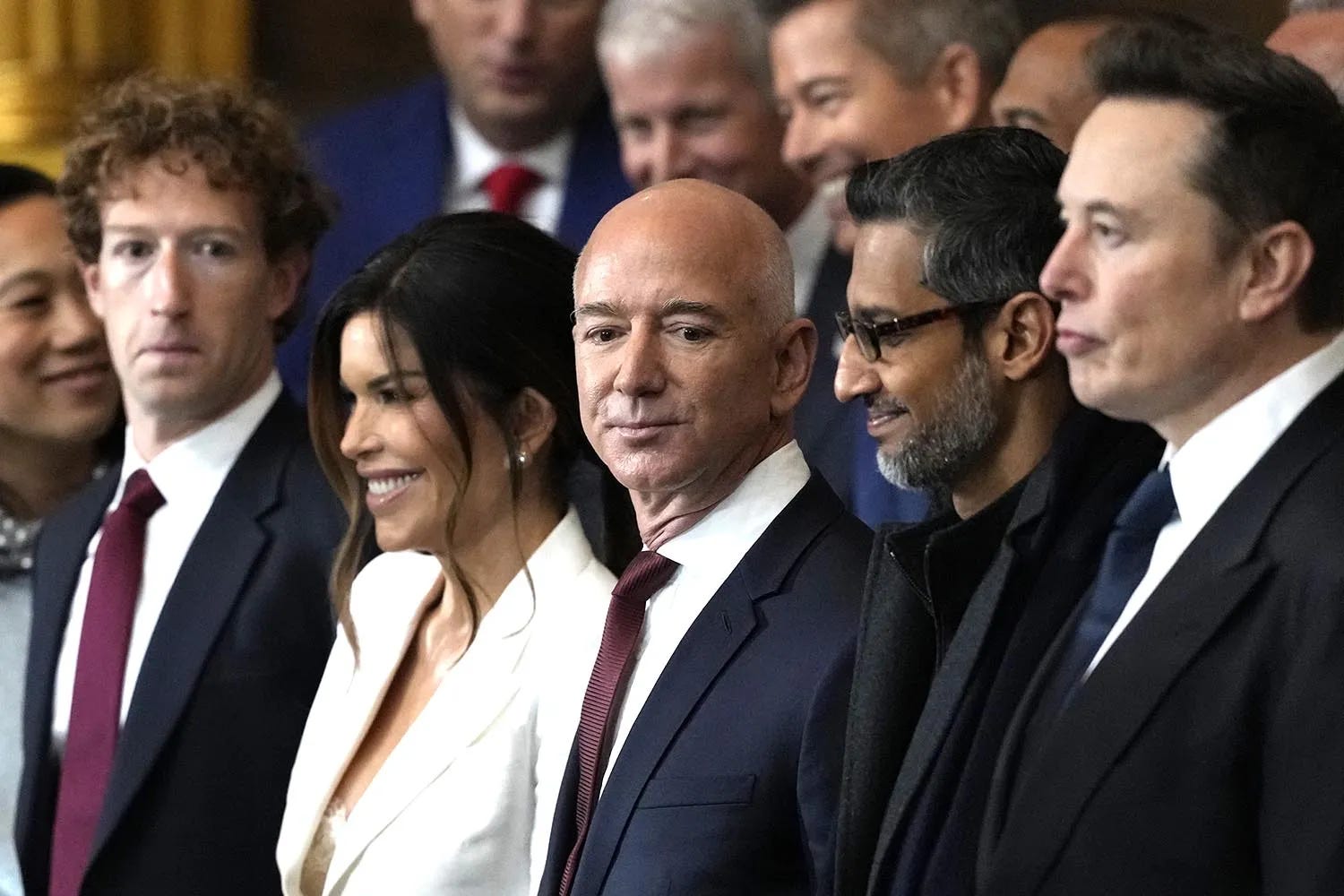
Adam Smith warned us about exactly this. Not the free market: the enemies of it. He spent The Wealth of Nations naming merchants and manufacturers who, given half a chance, would conspire against the public and against competition itself. He didn’t trust businessmen to compete fairly; he trusted the market to force them to, and only when nobody could rig the game. Two and a half centuries on, we’ve built an entire economy that teaches young founders to do precisely what he told us to watch for. Find your moat. Defend it. Never let the market do what it’s meant to do.
Land was only ever the first monopoly
The Georgists understood this before anyone. Land was the original moat: fixed in supply, essential to everyone, and if you could enclose it, you could charge ‘economic rent’ for something you did nothing to create. Ricardo worked out the mechanics; George worked out the injustice… and the solution. But land was never the whole story; it was simply the easiest monopoly to see, because you could point at a fence that enclosed it.
Today, the fences are less visible, and they have proliferated in our digital age, largely responsible for the insane trillion-dollar valuations we see today. A patent or copyright is a fence. A brand or broadcasting licence is a fence. A planning restriction, a professional accreditation, an exclusive government contract, an algorithm nobody else is allowed to copy, complex regulation or satellites occupy restricted low orbits: all fences, all granted or upheld by a state, all creating the same rent that land once did. The moat is not a private-sector invention. It is a public grant, dressed up as private genius.
That’s the sleight of hand that lets Peter Thiel argue, seriously, that monopoly is the precondition for success, and that competition is for losers. It is certainly a precondition for his kind of success. Nobody becomes a billionaire in a genuinely competitive market; competition erodes margins; that is its entire function; it is meant to. The billionaire’s arithmetic only works once competition has been switched off. Elon Musk’s empire runs the same way: government contracts, regulatory carve-outs, subsidies engineered to favour one firm over the field. Call it innovation if you like. Look closer, and it’s rent extraction with better marketing.
Thiel now has a lecture circuit of his own, and its message to fellow monopolists and their political allies is that anyone who tries to raise these issues, anyone who talks about existential risk, regulation, or reining in unchecked monopoly power, is not a critic to be answered but the Antichrist himself. In a series of private lectures at San Francisco’s Commonwealth Club, repeated near the Vatican in Rome, Thiel has argued that the Antichrist will not arrive as an obvious villain but as a reassuring administrator who uses the language of safety and risk to justify sweeping regulatory control; he has named Greta Thunberg and the AI-safety researcher Eliezer Yudkowsky as examples of the type. That this theory is being advanced by the co-founder of Palantir, a company built on exactly the surveillance infrastructure the Antichrist supposedly requires, and a man whose fortune depends on the technological monopolies any such regulation would touch, is not a detail his listeners seem to find awkward. It is, simply, how deluded he is: the argument recasts every person who might slow him down as a figure from the Book of Revelation, and every billionaire nodding along in the audience as a defender of Christendom rather than a beneficiary of the monopolies he has created and the externalities he does not have to pay for.
In today’s digital space, your attention becomes a fenced enclosure, and the fencing is being paid for at valuations that only make sense if you understand what is being bought. Why did Musk spend forty-four billion dollars on Twitter? He was ridiculed as a fool who had overpaid for a loss-making app; he was not a fool. He needed to enclose a commons: the platform where political attention is formed, and he needed politicians frightened enough of being mocked or de-platformed that they would not touch his position. Across the new media, the insane valuations of the billionaires are the price of digital land, and like any landlord they lobby the government to write the rules that secure their rent.
Consider the pattern rather than the rhetoric. In America, the Protecting Americans from Foreign Adversary Controlled Applications Act forced a foreign landlord, ByteDance, out of TikTok; the Supreme Court upheld it unanimously in January 2025, and by January 2026 the app had been restructured into a majority American-owned joint venture, TikTok USDS. Whatever one thinks of the national security case, the effect was to hand a vast attention-enclosure from one set of landlords to another, by act of the state, not by the choice of the tenants who live on it. In Britain, the Online Safety Act, enforced by Ofcom from 25 July 2025, now compels YouTube and its rivals to install “highly effective” age-assurance systems; child protection is the stated purpose, and no doubt a sincere one for many who drafted it, but the practical effect is that Ofcom decides which verification architecture every major platform must run, with fines of up to eighteen million pounds or ten per cent of global turnover for those who resist. And in France, Pavel Durov, Telegram’s founder, was arrested at Le Bourget in August 2024 and indicted on charges arising from what his own app’s users had done with its encryption; a head of a communications platform, gaoled over the failure of that platform to police its users on the state’s terms. Call it misinformation, call it protecting children, call it national security: in each case the outcome is the same. New digital landlords consolidate their hold on the fields where our minds now graze, and our politicians write the rules that let that enclosure stand.
The Georgist point is not that these concerns are fabricated. Still, that concern is now the standing justification through which enclosure of the attention-commons proceeds, exactly as concern for agricultural improvement was used to justify the theft of the commons and the evicting of the commoners to poverty and starvation.
Why the moat is the disease
Every pound spent widening a moat is a pound not spent making something better. That is the whole tragedy of it. A competitive firm survives by getting more efficient. A moated firm survives by making sure nobody else is allowed to get more efficient near it. The lobbyist, the patent lawyer, the compliance department built to keep smaller rivals out: none of it produces anything. It just protects what’s already been taken.
The insane levels to which monopoly companies now go are truly staggering, and the practices have become the ordinary currency of the consultancies and the big investors who service them: undercutting rivals until they cannot survive, buying out the threat before it can mature, and stripping a competitor of its key staff rather than competing with them. Billions that should have gone into genuine investment are instead spent buying market position outright.
Take the “buy or bury” strategy the FTC put before a federal court in its case against Meta. The Commission’s own complaint quoted Mark Zuckerberg’s 2008 maxim that it is “better to buy than compete”, and set out how Facebook paid a billion dollars for Instagram in 2012 and nineteen billion for WhatsApp in 2014 precisely because each was a rising threat rather than a proven business. Judge Boasberg ruled in November 2025 that the FTC had failed to show Meta still holds that monopoly today, given how much the market has since shifted towards TikTok and YouTube; the acquisitions themselves went unpunished.
The same logic now runs through the AI talent wars, where the currency is people rather than platforms. Meta’s Mark Zuckerberg has reportedly offered individual researchers packages worth over a hundred million dollars, and in at least one case as much as one and a half billion dollars over six years, to strip OpenAI, Google DeepMind and Anthropic of the staff building their frontier models. Where an outright acquisition looked too much like the sort of deal regulators might unwind, Meta instead paid fourteen point three billion dollars for a forty-nine per cent stake in Scale AI, structured so as to bring its founder and much of its senior team across without ever having to call it a merger. This is the acqui-hire as regulatory workaround: the substance of a takeover without the threat of a antitrust filing.
None of this is peripheral to how venture money works; it is the model. The angel investor sits on the boards of several companies competing in the same field, sees every rival’s cap table and product roadmap before the public does, and steers each towards the exit that suits the fund rather than the market: acquisition by the dominant incumbent, or elimination. He is not a backer of competition; he is an adviser on how to monopolise it, paid in the same rents that Ricardo identified in land two centuries ago, now extracted from the market for talent and attention instead.
This is why your rent is unaffordable, why your energy bill keeps climbing, why the medicine you need costs ten times what it costs to make, and why the software running your life gets worse each year while somehow costing more. Monopoly, whatever disguise it wears this decade, does not merely take a slice of your wage; it takes the future itself, the productivity that genuine competition would have delivered and that instead gets diverted into the economic rent we pay through monopoly.
The same structure sits underneath medicine, where a patent is a temporary but total monopoly on a molecule that can cost pence to manufacture, and underneath the software you rely on daily, where the subscription renews for more each year as the product itself degrades once the competition it originally had to win you from has been bought out or starved of capital. In every case the mechanism is the same one this essay has traced through Meta’s acquisitions, the AI talent wars, and the digital landlords who fenced your attention: monopoly does not ask permission to extract, it asks only that the externality land on somebody too diffuse and too far downstream to object in time.
None of this means innovation should go unrewarded. A genuine breakthrough, a new microprocessor, a new operating system, deserves its moment of protection. Nobody invents anything hard if a rival can copy it on day one and undercut them on day two. That much Thiel gets right, even if his conclusion is wrong. The question was never whether to reward invention. It’s how long the reward should last, and what you do once the invention has stopped being new and started being a straitjacket.
Paying not once, but twice
There is another effect of monopoly, distinct from the rent it extracts from your wage, and that is the negative externality: the cost the monopolist does not pay because it has arranged, whether by lobbying, scale, or sheer distance from the site of harm, for someone else to pay it instead.
A monopoly that must compete cannot easily do this; a rival will undercut it by refusing to pass the cost on. A monopoly that need not compete has no such discipline, and the bill goes wherever it is politically cheapest to send it. Consider the data centre boom now under way across America. The electricity is not generated for the household footing the bill; the US Energy Information Administration recorded a 21.7 per cent jump in Pennsylvania’s electricity prices in 2025 alone, in a state where Amazon has committed twenty billion dollars to new facilities, and Baltimore households saw their monthly bill rise by seventeen dollars after a single wholesale power auction driven by data-centre demand. More than seventy per cent of the American grid nodes recording the sharpest price rises sit within fifty miles of a data centre. The water drawn off for cooling, and the gas turbines wheeled in to power the site, land on the surrounding parish as an unpriced cost; Memphis residents fought Elon Musk’s xAI over exactly this. None of it appears on the hyperscaler’s balance sheet. It appears on the electricity bill, the water table, and the air quality of a community that was never a party to the transaction.
The state doesn’t get captured; it’s bought
None of this survives by accident. Every moat needs somebody inside government prepared to dig it, maintain it, and defend it from anyone trying to fill it back in. That isn’t a conspiracy theory. It’s the plain mechanics of modern policy-making, and the evidence for it is now overwhelming.
Big Tech has learned the lesson well. Eight of the largest tech and AI firms spent a combined record $71 million lobbying Washington in 2025, and between them the industry now fields something close to one lobbyist for every two members of Congress. Pharmaceuticals got there first: the industry runs more revolving-door lobbyists than any other in America, over a thousand of them, having moved from government jobs straight into the companies they used to oversee. It is also, not coincidentally, the sector most practised at stretching a patent decades past the point where the original invention has paid for itself many times over.
Britain has its own version of this, closer to home for anyone watching their water bill climb while the rivers fill with sewage. Ofwat, the regulator meant to hold water monopolies to account, has for years drawn its staff from the very companies it regulates and sent them back again afterwards; one former Ofwat chief executive is now a director at Thames Water, the company he was once paid to keep in check. An economist who used to work inside the regulator has described the sector as built for extracting wealth rather than delivering water. Call it capture if you prefer the polite term. It’s simpler to say the fox was hired to inspect the henhouse, and then went and got a job there.
Political scientists Martin Gilens and Benjamin Page tested it directly, examining close to 1,800 policy outcomes over three decades to see whose preferences actually changed government policy. Their finding: economic elites and business-oriented interest groups have a substantial, measurable effect on which policies get adopted, while the preferences of ordinary voters have next to none. Other academics have since queried how large that gap really is, and the methodology has had its critics. But nobody seriously disputes the basic shape of it: money buys access, and access buys policy. Nobody needs to hand over a brown envelope, although there are plenty of those. They just need to fund the lobbyist, hire the right people out of government, and wait.
This is why “reforming” a monopoly so rarely works. You cannot regulate a moat when the regulator was built, staffed, and often paid for by the people it’s meant to be watching. The only fix that survives contact with a captured state does not depend on the regulator’s goodwill at all. Which is exactly why it must be tackled more fundamentally; the monopoly profit must be removed at source.
I have experienced this first hand in my own work. I have advised some political parties, and I once found myself at a very boozy dinner with the main leaders of one of the British parties. I got talking to a director of operations for that party, and we ended up in an argument; it was a form of theatre; this chap wanted to impress the leaders and grandees. Somewhere in the course of it he let slip that he was actually on secondment from a large corporation. His views were wrong, and provably wrong, and I embarrassed him in front of the leaders for holding them; but those were precisely the views that would have funnelled money towards the company he actually worked for.
I will admit I went to town on him, in my own quietly high-functioning autistic way, listing the facts, the scientific research and his false assumptions one by one until there was nothing left of his position. He has since gone on to a lucrative career. I am the one now frozen out of giving my own expertise to politicians.
Don’t tax the moat. Reclaim it.
This is the insight - the secret to tackling monopoly, the one that has been given to us by all the great classical economists and the one suppressed by all the shills of the neoclassical and now neoliberal schools of thought. To understand it properly, you must read this book:
It’s a tax but actually not a tax. Call it a tax, and people hear an extra burden on enterprise, a penalty on success, the state reaching into a pocket it has no business in. It’s the opposite of that. The wealth locked up in a moat was never the monopolist’s to begin with. It was manufactured by the rest of us: by the public research that seeded the invention, by the customers with no alternative supplier, by the state that drew up and enforced the fence in the first place. Reclaiming it isn’t confiscation. It’s taking back what was quietly taken from everyone else and handed to one shareholder register.
The mechanism itself is simple enough to fit in a sentence: let the state grant its licences, its patents, its protections, as generously as it likes, but price them properly, for outright monopolies claim the full economic rent as monopoly and for patents or copyrights raise that price as the years go by. A light touch on day one, when the risk is real, and the invention is fragile. A rising reclamation every year after, because a monopoly still standing after twenty years isn’t innovation any more, it’s a toll booth, suppressing innovation and the public that built the road is owed a fare for the privilege of running it.
Do that, and the whole incentive structure flips in the direction a healthy economy needs. Sit on your moat too long, and the reclamation eats your margin faster than any competitor could. Suddenly the smart move isn’t hoarding the old patent: it’s inventing the next thing, because that’s the only way to keep the bill down. Capital that currently sits idle behind a legal fence, earning rent for doing nothing new, gets pushed back out into the economy looking for the next real improvement. Just think of the ginormous consequences of turning all our capital and human resources to real productivity; the word transformative does not even begin to comprehend its colossal effects
That shift shows up in wages and jobs, not just in economists’ models. Rent extracted through a moat is money that never becomes a pay rise, because a firm protected from competition does not need to bid for better staff or invest in better tools; it just banks the difference. Reclaim that rent and redirect it, through lower taxes on wages and genuine enterprise and through public investment that lowers the cost of living, and you get an economy where firms compete for workers, where new entrants can actually enter, and where productivity, the one thing that has stagnated across the West for two decades, has a reason to grow again; hell, it will explode. An economy with fewer moats isn’t a poorer economy. It’s a more efficient one, because efficiency is what competition was invented to force out of people.
The real fight was never left against right
Every one of these examples, the pharma patents, the tech lobbyists, the water regulator, wants you distracted by that older, tired language of left against right, state against market, woke versus classical moral, multiculturalism against protecting community tradition. The real fight, the only one that has mattered since Smith first wrote it down, is monopoly against the free market. And in that fight, progressives have been on the wrong side of the argument for a generation.
Too many who care about poverty, about wages, about the planet, have come to treat “free market” as the enemy’s phrase, and cede it to the very people busy destroying the thing it’s supposed to describe. That is backwards. Thiel and Musk are not free-market men; they are the most sophisticated opponents the free market has. A market that lets one player enclose the fence, patent the cure, or own the licence is not free at all, whatever the pitch deck calls it. Progressives shouldn’t fear the free market. They should be the ones who actually build it, because a market without monopoly, and without the freedom to dump your costs onto someone else’s river or someone else’s climate, is the sharpest tool against poverty ever devised. It is competition, not central planning, that drives prices down to what things actually cost.
The free market must contain its negative externalities. Every ounce of pollution, every depleted resource, every poisoned river, every flooded town, every stripped-out ecosystem service: all of it must be paid for within the market that caused it. Every penny that a polluter is made to pay is a penny that need not be taken from the taxes of an impoverished Deliveroo courier or a single mother; every penny recovered this way can fund a school or a hospital instead. Every penny extracted from the externaliser, rather than from the public who bore the harm, makes society healthier, the environment sounder, and the economy itself more efficient.
That is the whole case, in the end. Reclaim the rent from monopoly. Price the damage done to the air, the rivers, and the soil, so its damage is no longer handed to the next generation. Do both, and you are left with something we have never actually tried in earnest: a market genuinely free of the moats we keep mistaking for the market itself. That, and nothing less, is what will lift people out of poverty, put a wage rise back in pockets, and leave our children a planet and an economy still worth inheriting.
So the next time you hear it on a podcast, in a pitch deck, in the pink pages of the investment press: the moat, that’s the tell. Somebody has found a monopoly, and they want you to admire it. Don’t. Reclaim it.
"Competition is a sin" JD Rockefeller
www.doughforge.org is adjacent to this Georgist message add #proudhon #kropotkin #Bakunin #ChesterBelloc #distributism to taste https://grubstreetinexile.substack.com/p/progress-and-poverty-revisited-a?r=l1oox&utm_campaign=post-expanded-share&utm_medium=web